






Core Process Flow for Ultrasonic Lens Cleaning
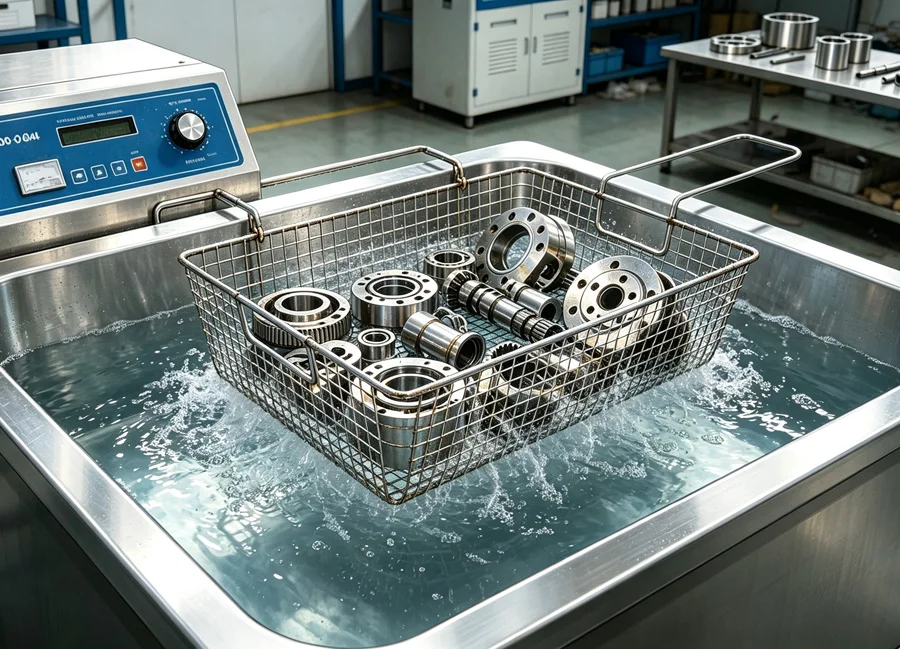
The principle of ultrasonic cleaning is that ultrasonic waves generate high‑frequency pressure waves (cavitation effect) in liquid, forming countless tiny vacuum bubbles. The powerful impact force released when these bubbles bursts can penetrate every micro‑gap on lens surfaces and frames, blasting off stubborn grease, dust, fingerprints and other contaminants to realize non‑contact, scratch‑free deep cleaning.
The complete workflow is divided into four major stages: preparation stage, cleaning stage, post‑treatment stage, inspection and storage stage.
Stage 1: Preparation & Pre‑treatment
Purpose: Improve cleaning efficiency, protect equipment and prevent cross‑contamination.
- Inspection and Sorting
Check spectacle materials. In particular, confirm whether frames are made of water‑intolerant materials such as wood or tortoiseshell. Such materials are forbidden for ultrasonic cleaning.
Inspect lenses for severe scratches, cracks or coating delamination (wrinkling, blistering) on edges. Lenses with heavy coating delamination may suffer further damage under ultrasonic action.
Check for loose frame hinges; fasten components in advance if necessary. - Preliminary Dust Removal
Use a soft brush or air blower (for camera lens cleaning) to gently remove large‑particle dust and fibers from lenses, frame hinges and nose pads. This step prevents massive contaminants from entering the cleaning solution and extends its service life.
- Cleaning Solution Preparation & Loading
Add liquid into the cleaning tank:
Preferred option: Fill the ultrasonic tank with room‑temperature or slightly warm water (<40°C). Add a small amount of special spectacle cleaning fluid or neutral detergent following the manufacturer’s instructions. Dedicated cleaning liquid enhances degreasing performance and delivers anti‑fog and anti‑static properties.
Economical option: Use purified or distilled water only. Tap water is not recommended, as mineral residues may cause water spots after cleaning.
Place spectacles: Gently put spectacles into the cleaning basket or hang them in the center of the tank with a bracket. Ensure lenses are fully submerged and temples are unfolded so that cleaning liquid can reach all parts sufficiently.
Stage 2: Ultrasonic Cleaning Execution
Purpose: Perform deep cleaning via cavitation effect.
- Start Cleaning
- Close the lid (if equipped) and switch on power supply.
Set cleaning time: normally 2‑3 minutes. - Insufficient time: contaminants cannot be removed thoroughly.
- Excessive time: may impose unnecessary stress on lens coatings and frame adhesive and bring potential risks. Do not exceed 5 minutes even for heavy stubborn stains.
- Start the unit. You will observe plenty of fine bubbles in water and hear high‑frequency sizzling sound.
Stage 3: Post‑treatment
Purpose: Remove residual cleaning liquid and dislodged contaminants to restore lenses to bright condition.
- Retrieval & Rinsing
- Take out spectacles immediately once cleaning finishes.
- Critical step: Rinse both sides of spectacles rapidly with running purified / distilled water to completely wash away loosened dirt and residual detergent attached to surfaces. Skipping this step will lead to redeposition of contaminants after water evaporates.
- Dehydration & Drying
Professional preferred method:
–
- Air blow: Use professional air‑blow gun to blow off most water droplets from lenses and frame hinge gaps. It is the safest non‑contact drying solution.
Standard method:
- Microfiber cloth: Lay spectacles on clean cloth, wrap lens corners gently and blot up moisture. Do NOT wipe back and forth with force. Tiny residual particles on lenses may cause fine scratches during wiping.
Stage 4: Final Inspection & Storage
Purpose: Verify cleaning quality and store products properly.
2. Storage
- Store cleaned spectacles inside a clean spectacle case.
Process Summary
A[Start: Inspect spectacles] –> B{Is material suitable?};
B — Yes –> C[Preliminary dust removal];
B — No (Wood / Tortoiseshell / Heavy coating delamination) –> X[Prohibit ultrasonic cleaning];
C –> D[Prepare solution & load spectacles];
D –> E[Ultrasonic cleaning: 2‑3 min];
E –> F[Retrieve & rinse];
F –> G[Dehydrate & dry: Air blow + blot with lens cloth];
G –> H[Final inspection];
H –> I[Store in spectacle case];
Important Notes & Prohibitions
- Forbidden materials: Never clean frames made of porous natural materials including wood, tortoiseshell and horn. Do not clean decorative spectacles bonded with non‑waterproof glue.
- Water temperature control: Hot or boiling water is strictly prohibited. High temperature will severely damage lens coatings and frames.
- Cleaning liquid selection: Do NOT apply organic solvents or corrosive liquids such as alcohol, acetone, thinner, strong acid or strong alkali.
- Equipment maintenance: Drain and wipe dry the cleaning tank after each use to avoid limescale and bacterial growth.
- Cleaning frequency: Deep ultrasonic cleaning is recommended once every 1‑2 weeks, combined with routine simple cleaning. Over‑frequent ultrasonic cleaning is unnecessary for well‑maintained spectacles.
By following this standardized process, you can safely and efficiently apply ultrasonic technology and restore lenses to optimal transparency.